 U-Pick Nearby
How to keep a carved pumpkin from rotting
A carved pumpkin lasts about a week, sometimes less in warm weather. To stretch that to two weeks: carve it no more than a day or three before Halloween, coat every cut edge with petroleum jelly, keep it in the shade, and light it with an LED instead of a candle. If it starts to shrivel, a cold-water soak brings it back.
Why carved pumpkins rot so fast
A whole pumpkin has a hard rind that keeps water in and mold out. That's why an uncarved pumpkin stored at 50 to 55°F can last two to three months, according to Virginia Cooperative Extension. Once you cut into it, the flesh dries out, caves in and becomes food for mold and bacteria. Leftover pulp inside makes it worse, and so do big openings and warm weather.
| Pumpkin | How long it lasts |
|---|---|
| Carved, untreated | 3 to 10 days |
| Carved, treated and kept cool | up to about 2 weeks |
| Uncarved on a cool porch | 8 to 12 weeks |
1. Start with a pumpkin that keeps
A long life starts at the pumpkin patch. University of Illinois Extension suggests:
- A green, firm stem at least 1 to 2 inches long. Never carry a pumpkin by the stem; if it snaps off, the pumpkin rots faster.
- No soft spots, cuts or holes, and a flat bottom so it doesn't roll.
- The thumbnail test: if your nail scratches the skin easily, the pumpkin isn't fully ripe and won't keep as long.
At home, wash the outside with warm water and let it dry before you carve.
2. Carve as late as you can
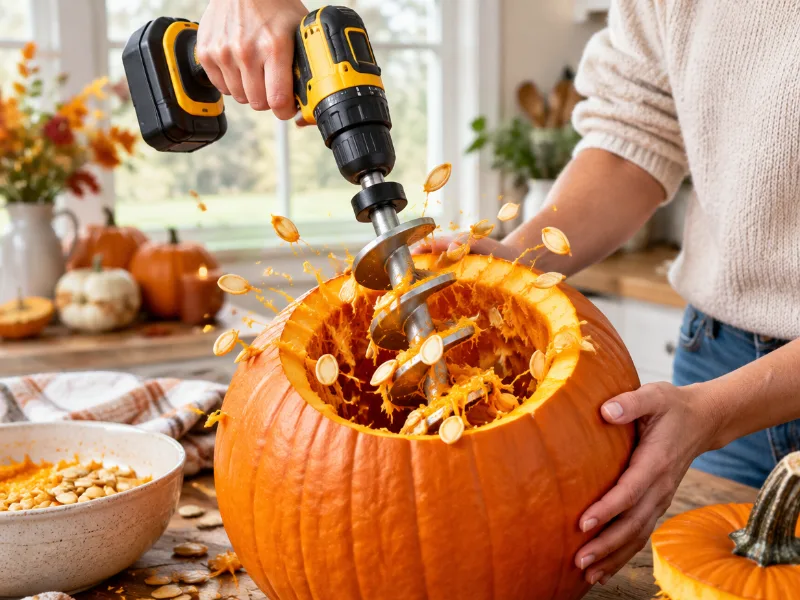
This does more than any spray. Leave the pumpkin whole on the porch until a day or two before you want to light it. Scrape the inside clean, so no stringy pulp is left, and thin only the wall you're carving to about an inch. Smaller designs with fewer big holes last longer than a face with huge cut-outs. If you want to keep the stem, cut the opening from the bottom or the back instead of the top.
3. Seal the cut edges with petroleum jelly
Rub a thin layer of petroleum jelly on every cut surface and the inside walls. It slows drying and is recommended by both University of Illinois Extension and Mississippi State Extension. In Apartment Therapy's 2025 test of seven pumpkins over ten days outside, the one with petroleum jelly after carving stayed "plump and structured" and beat every other method.
Two catches: petroleum jelly is flammable, so don't combine it with a real candle, and a coated pumpkin shouldn't go into your compost.
4. What about bleach?
Bleach is the most repeated tip online, and the test results disagree. A TV station test in Spokane found that bleach and petroleum jelly were the only two treatments that kept mold away for 11 days. Apartment Therapy's 2025 test found the opposite: the pumpkin soaked in bleach after carving turned into the worst "rotting mess" of the group, worse than the untreated one. Recommended ratios also range widely, from a teaspoon per gallon to one part bleach in ten parts water.
Our take: petroleum jelly is the safer bet. If you want to try bleach, use a weak solution as a quick wipe or spray, wear gloves, and keep the pumpkin away from pets and wildlife afterward.
5. Keep it cool and out of the sun
Shade matters as much as anything you put on the pumpkin. A spot on the porch that gets afternoon sun can cook it in days. The ideal is around 50 to 60°F. When frost is forecast, bring it inside overnight, because a frozen pumpkin turns mushy as soon as it thaws.
6. Use an LED light instead of a candle
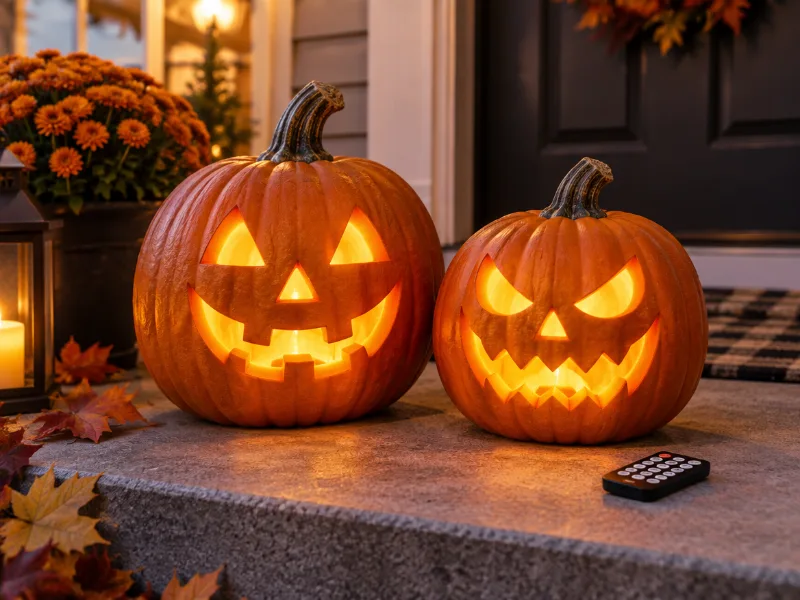
A candle heats the inside of the pumpkin and slowly cooks the flesh. University of Illinois Extension names candle heat as one of the reasons carved pumpkins go soft. It's also a fire risk: according to the NFPA, about a third of home decoration fires are started by candles. Battery LED lights stay cool and many have a timer, so the pumpkin glows every evening without you.
As an Amazon Associate we earn from qualifying purchases, at no extra cost to you. Check the current price on Amazon.
If you do use a real candle, cut a small vent hole in the back near the top and put the candle in a glass.
7. Revive a shriveled pumpkin
When the edges start to curl, soak the whole pumpkin face-down in a tub of cold water for a few hours or overnight. The flesh soaks up water and firms up again. Dry it inside and out before you put it back, and repeat after a day or two if needed. Some people also wrap it in a plastic bag and keep it in the fridge overnight. Never use warm water.
No-carve options that last for weeks
If you want your pumpkins to make it to Thanksgiving, don't cut them. Painted pumpkins, pumpkins with pop-in faces or stickers, and pumpkins decorated with markers keep for weeks because the rind stays intact. Mississippi State Extension recommends painting for exactly that reason. Our pumpkin carving tools guide has a no-blade kit for kids, too.
After Halloween
- Compost it: remove candles, wax and paint, chop the pumpkin into pieces and mix it with leaves, or bury the pieces in a garden bed (NC State Extension). Skip pumpkins coated in petroleum jelly or treated with bleach.
- Don't leave it out for wildlife: Colorado Parks and Wildlife warns that pumpkins attract bears and other animals. Painted or treated pumpkins are bad for animals anyway.
- Donate plain pumpkins: some farms and zoos collect untreated pumpkins as feed after Halloween. Ask first.
Still need a pumpkin?
We list 1,963 pumpkin patches across the US. Most are open through Halloween weekend; check the farm's hours before you go.
Sources
- University of Illinois Extension: How to pick the perfect pumpkin
- Virginia Tech / Virginia Cooperative Extension: pumpkin tips and Iowa State: storing pumpkins
- Mississippi State Extension: Keep pumpkin decor fresh
- Apartment Therapy: carved pumpkin preservation test (2025) and KXLY test
- Farmers' Almanac (lifespans, temperature)
- NFPA Halloween fire data
- NC State Extension: pumpkins beyond Halloween and Colorado Parks and Wildlife